
Use PVC for simple runs
PVC can make sense when the roof edge is short, straight, easy to access and not carrying a large amount of rainwater. It is often chosen when budget is the main concern.
Cheong Seng blog
PVC can be useful for simple, budget-sensitive gutter runs. But when workmanship, durability, heavy rain flow and long-term appearance matter, stainless steel is usually the stronger choice.
Updated 13 July 2026 · Written by Cheong Seng, established in 1986.
Quick answer
Many owners ask whether they should install new PVC gutters or stainless steel gutters. The honest answer is that both can work in the right place. PVC is light, common and usually cheaper for simple short runs. Stainless steel is better when the roof needs strength, custom workmanship and a more durable outdoor finish.
PVC can make sense when the roof edge is short, straight, easy to access and not carrying a large amount of rainwater. It is often chosen when budget is the main concern.
Stainless steel is the better choice for longer gutters, heavy rainwater flow, shoplots, factories, extensions, visible front edges and roof lines that have leaked before.
A good gutter is not only the material. The slope, bracket spacing, outlet size, joint treatment, corner work and downpipe route decide whether rainwater leaves the roof properly.
Advantages
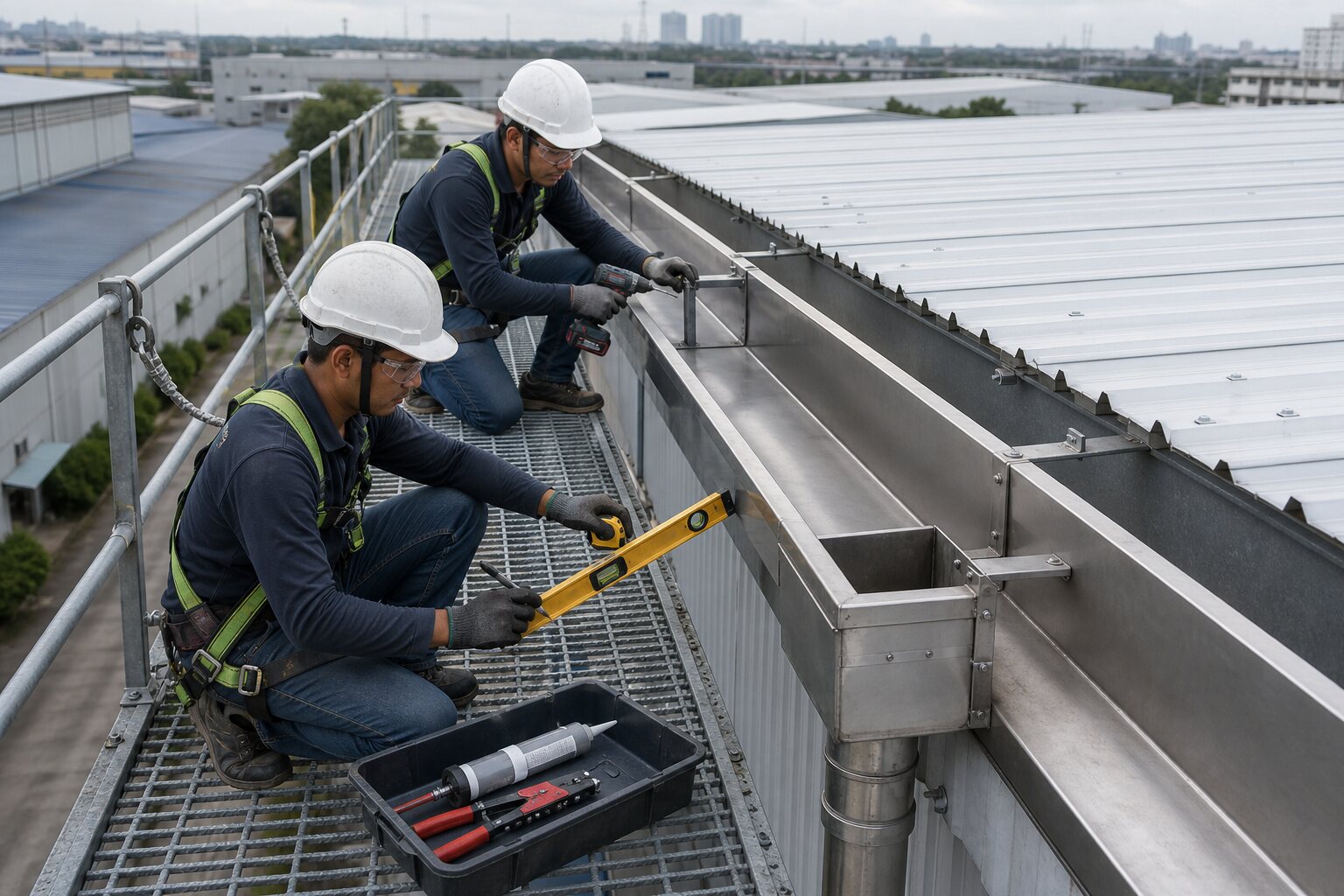
A gutter must hold rainwater while staying straight. Stainless steel has strong rigidity, so it suits long roof edges and larger gutter profiles. This is important for factories, warehouses and homes with roof extensions where water can rush into the gutter quickly during heavy rain.
PVC is lighter, but it needs careful allowance for movement. If a long plastic gutter expands, contracts, sags or moves at the joints, water may overflow or drip at the connection points.
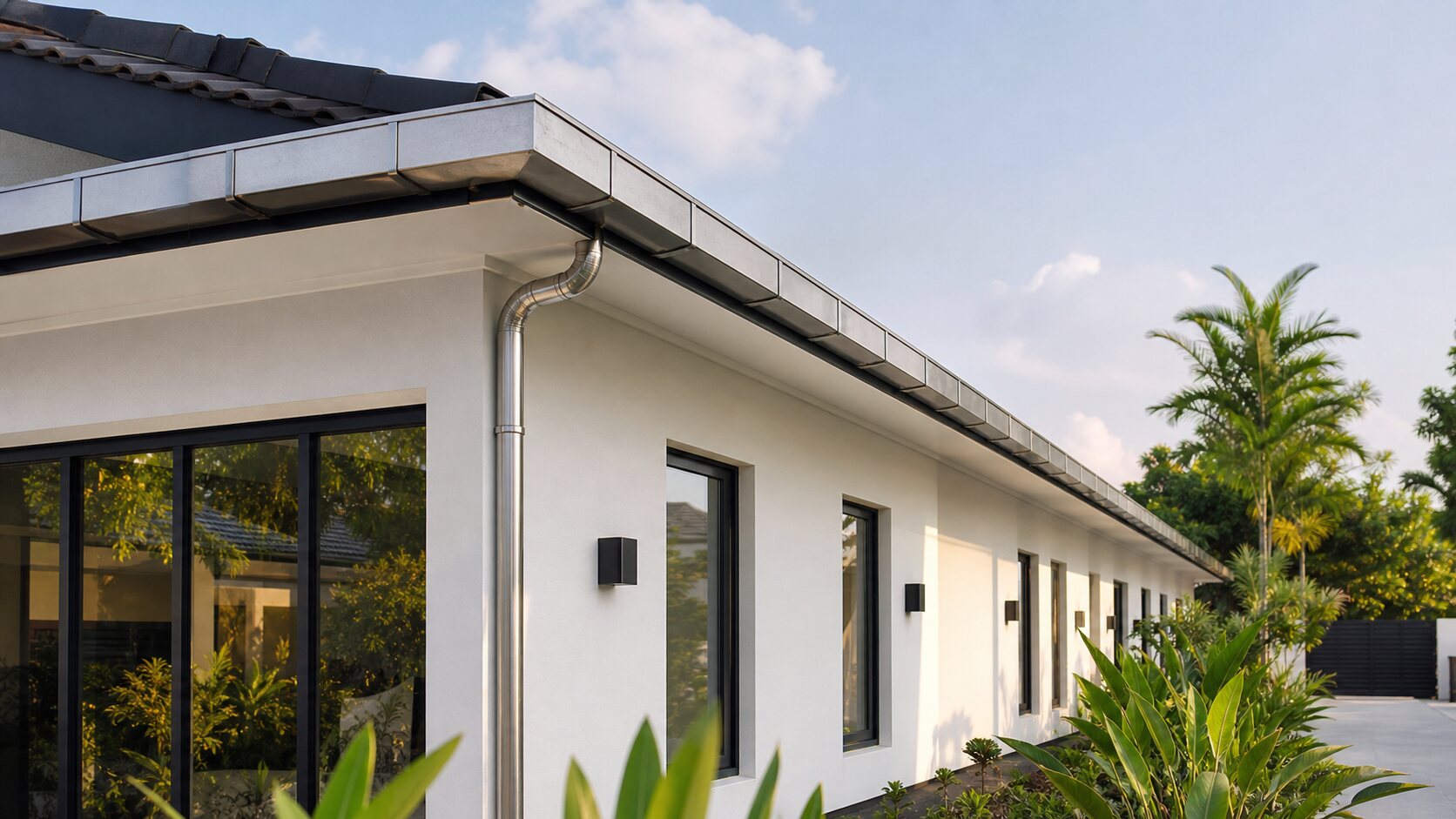
Many Malaysian roofs are not perfectly straight. There may be a kitchen extension, porch roof, wall return, odd corner, old fascia board or downpipe that cannot move. Stainless steel gutter work can be measured, folded and fitted to suit the actual roof edge.
This is where workmanship matters. A neat stainless steel gutter should have a practical fall, clean corners, strong outlet openings, supported joints and a finish that looks like it belongs to the building.
Roofs in Klang Valley face hot afternoons, sudden storms, damp mornings, leaf blockage and pollution. Stainless steel is valued because it resists corrosion and keeps a solid finish when the right material and workmanship are used.
Other materials can still be useful, but they may be more sensitive to heat, sunlight, joint movement or impact. For owners who do not want to replace the gutter again soon, stainless steel is usually the more confident long-term choice.
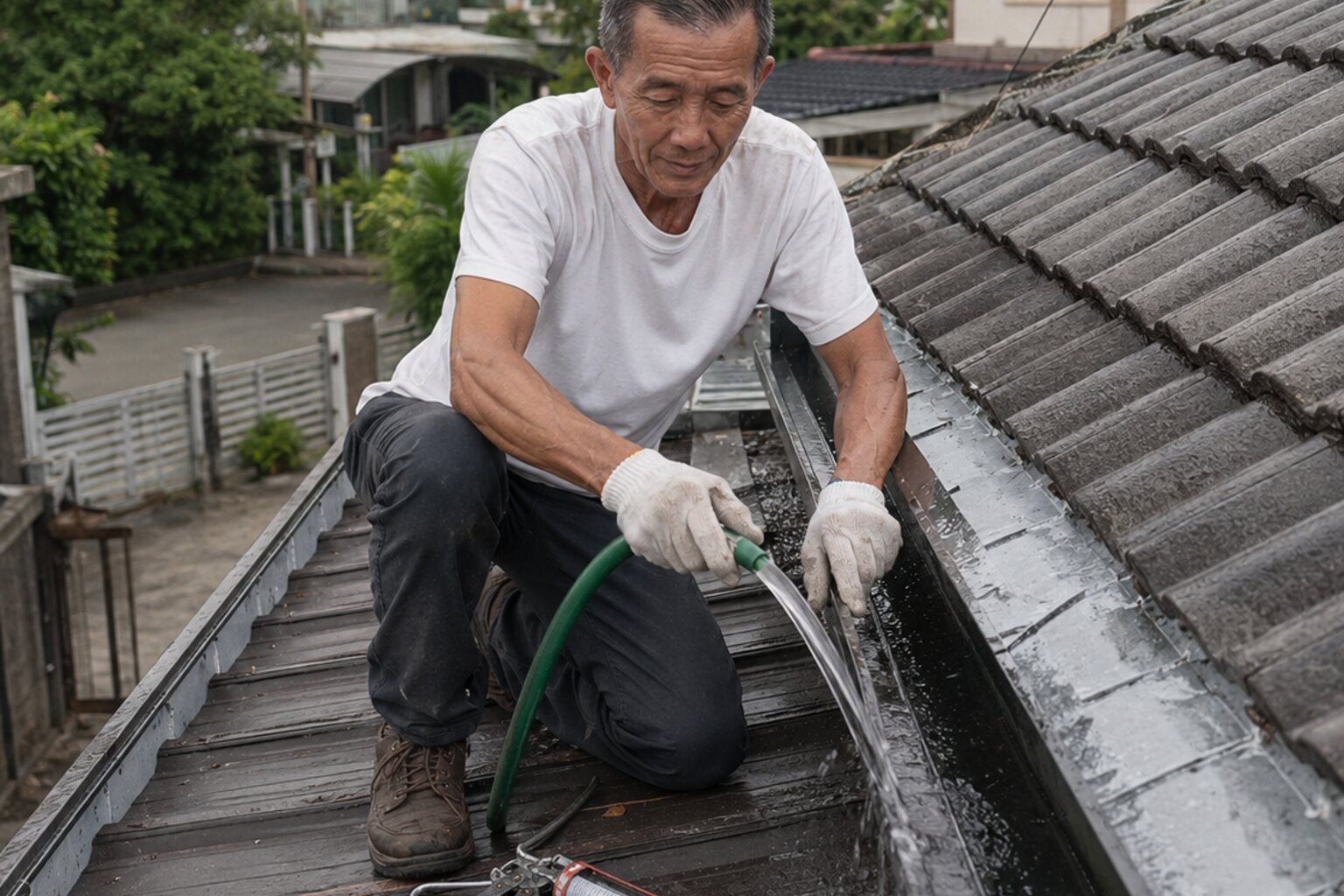
If an old gutter has leaked many times, the issue may not be one small hole. The gutter may be too shallow, too narrow, badly sloped, poorly supported or connected to too few downpipes.
Replacing it with a stronger stainless steel gutter gives the installer a chance to correct the whole water path: size, slope, outlets, downpipe route and roof edge detail.
Simple checklist
Choose stainless steel if most of these points match your property:
The roof area is large, steep or sends water into one long gutter line.
The gutter needs custom bends, wall returns, outlet work or neat visible finishing.
The current gutter has repeated leaks, overflow, sagging or weak joints.
Water can damage stock, machines, ceiling boards, wiring, tenants or customer areas.
Simple summary
Stainless steel gutters are not only about a cleaner metal finish. Their main advantages are strength, durability and the ability to fit real roof conditions. PVC can be light and affordable for short, straight and simple runs. When the roof has heavy rainwater flow, difficult corners, repeated leak history or business risk, stainless steel is usually the more reliable option.
A good stainless steel gutter still depends on workmanship. The installer must get the slope, joints, corners, outlet openings, downpipe route and support spacing right. Strong material with poor workmanship can still leak, so Cheong Seng checks the roof condition before recommending repair or replacement.
Contact Cheong Seng
WhatsApp photos of the roof edge, old gutter, downpipe and leak area. Cheong Seng can advise the practical option for your home, shoplot, factory or warehouse.
+60 12-323 6603